Artist Statement
Re-entering the Flow
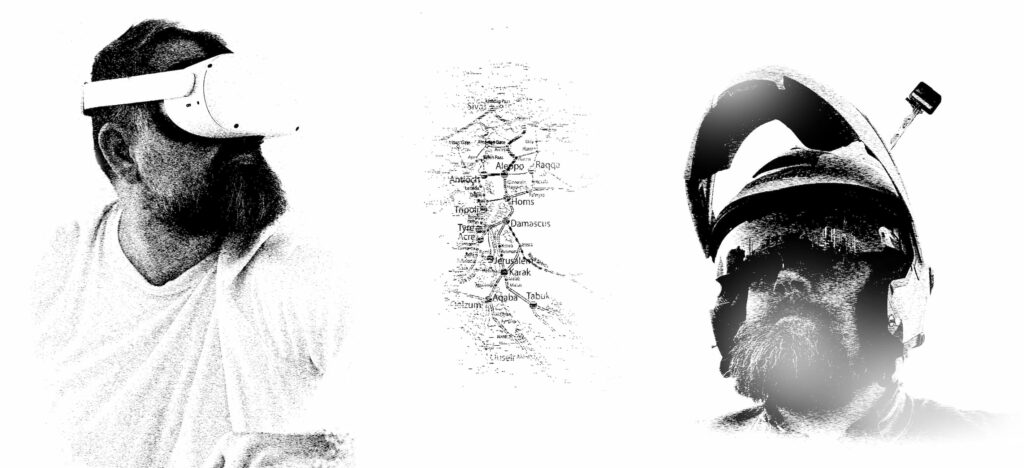
Re-entering the Flow is an ongoing Cinematic Virtual Reality (C-VR) travelogue installation created as part of a practice-led doctoral research project. The work revisits the travelogue genre, traditionally concerned with movement, encounter, and the transmission of experience, extending it into an immersive, post-cinematic form. Rather than offering a descriptive account of place, the installation approaches travel as an embodied process unfolding through duration, rhythm, and perceptual continuity.
The project is based on extended motorcycling journeys along the King’s Highway in Jordan—one of the world’s oldest continuously used routes. Traditionally, travelogues organise experience through narration, framing, and retrospective coherence. In contrast, this work emphasises traversal over destination and sensation over explanation. Presented through head-mounted displays in gallery settings, the C-VR travelogue invites participants to re-enter a moving perceptual field where landscape, sound, and forward motion are encountered as a continuous flow rather than as segmented scenes.
Cinematic Virtual Reality here acts as a contemporary reconfiguration of the travelogue genre. The absence of a fixed frame, the reduction of editorial control, and the participant’s freedom of attention displace the authoritative perspective of traditional travel narratives. Instead of being led through a story, viewers orient themselves within an unfolding environment, creating meaning through embodied observation and temporal immersion. The road emerges not just an object to observe but a condition to inhabit.
Central to the installation is the idea of re-living rather than replaying. Drawing on phenomenological approaches to perception and memory, the work considers recollection as an active, bodily process rather than the retrieval of stored representations. The immersive travelogue operates across layered temporalities: the original journey, the recorded environment, and the participant’s present encounter coexists within a single experiential field. Memory flows as sensation, creating an oscillation between immersion and awareness of mediation that remains unresolved yet productive.
The installation resists the promise of complete immersion often linked with VR technologies. Participants remain aware of their bodily stillness, the technological apparatus, and the absence of physical risk, even as perceptual cues evoke a strong sense of movement and spatial presence. This tension echoes the reflexive dimension of the travelogue genre itself, where immediacy and distance, presence and narration, are held in balance.
Situated within a broader Mediterranean and Levantine context, the King’s Highway is regarded as a route shaped by centuries of circulation—of people, goods, stories, and cultural memory. Displayed in gallery settings, the work reframes the travelogue not as a record of elsewhere, but as a site where flows of movement, memory, and mediation converge. The road becomes a connective tissue linking past and present, body and landscape, physical travel and digital re-embodiment.
As an art-research installation, Re-entering the Flow contributes to an ongoing doctoral inquiry into applied phenomenology, performative autoethnography, and immersive spectatorship. By expanding the travelogue into Cinematic Virtual Reality, the project proposes the genre as a living, adaptable form—capable of engaging contemporary technologies while remaining grounded in the experiential realities of movement, attention, and embodied perception.
link to article discussing and contextualising the work, Questions of (un)framedness in the post-cinematic road movie/travelogue in Philosophy of Photography, Volume 15, Issue 1-2: Expanded Visualities: Photography and Emerging Technologies, Oct 2024
https://intellectdiscover.com/content/journals/10.1386/pop_00090_1
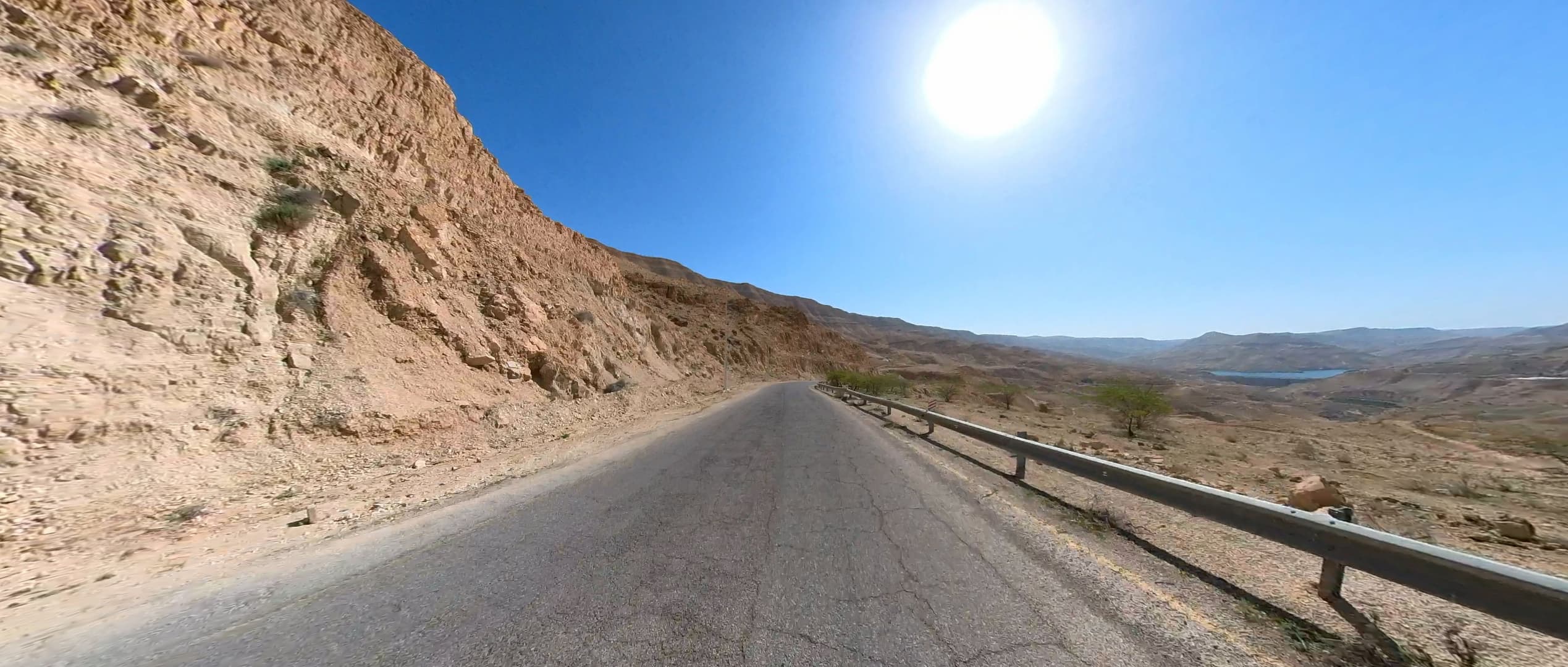
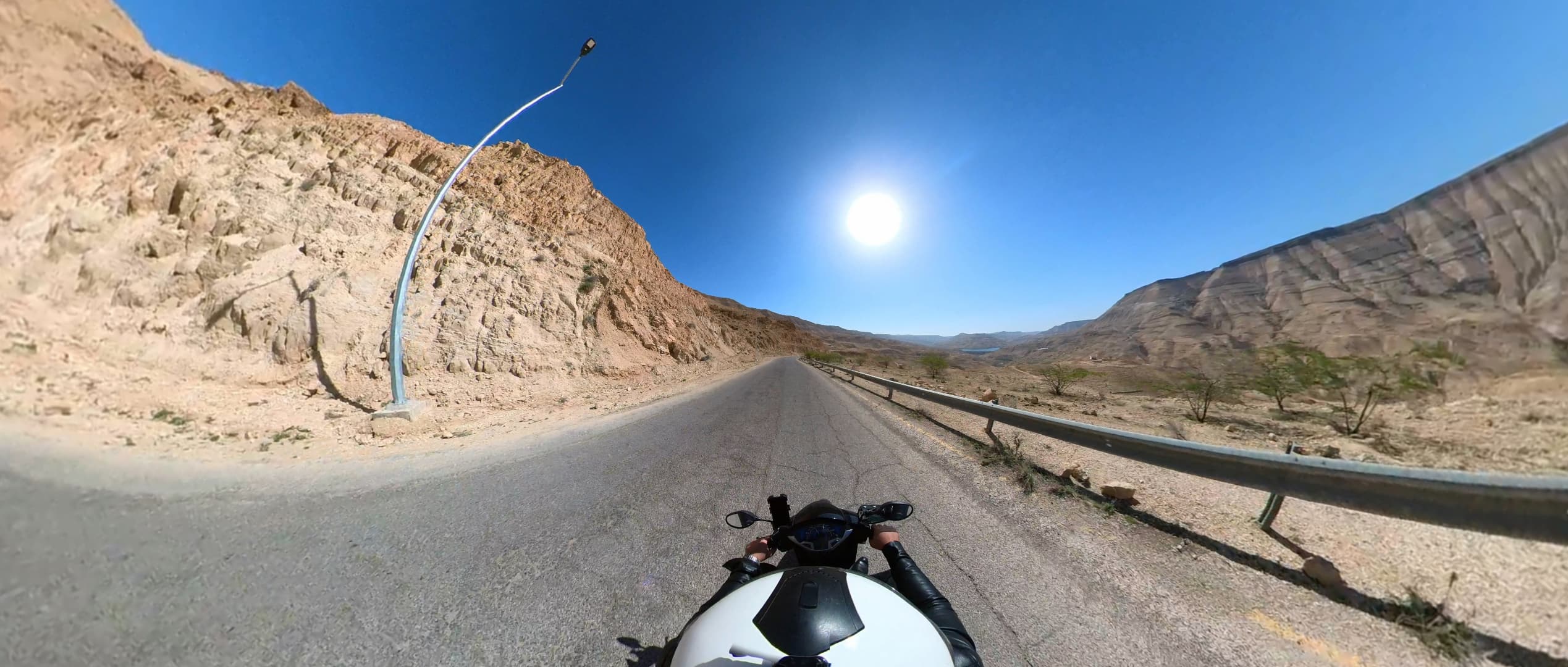
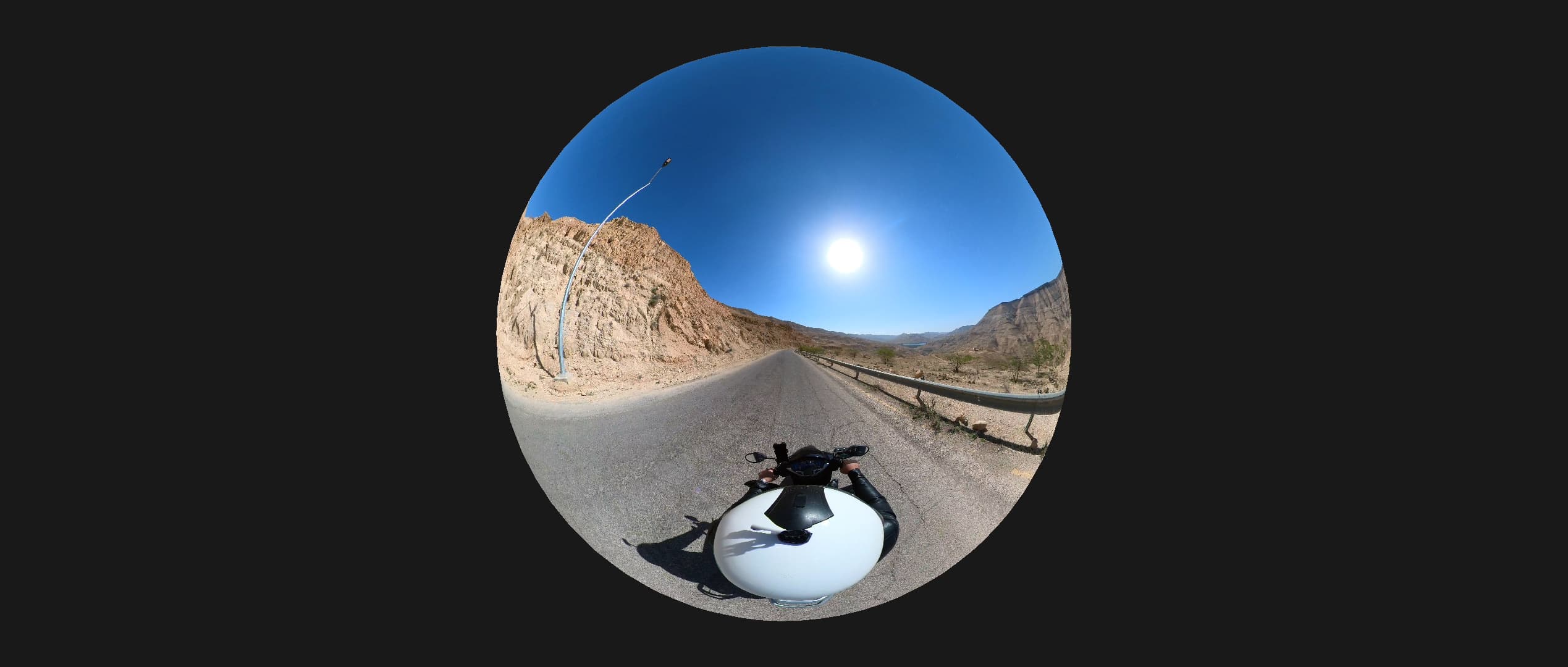
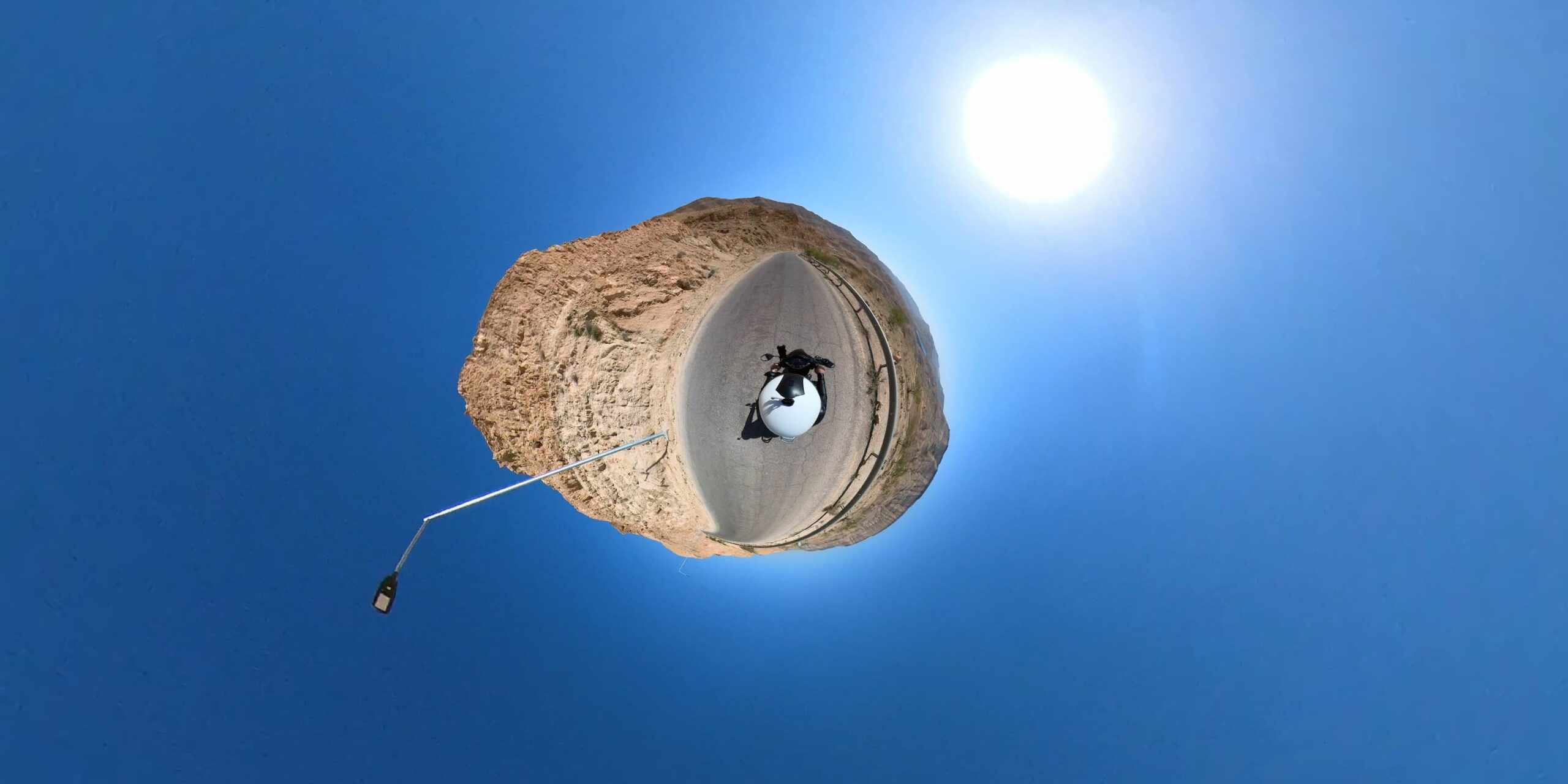
excerpt from an 8hrs Cinematic Virtual Reality video, for reference purposes only – best viewed in a Head Mounted Display.
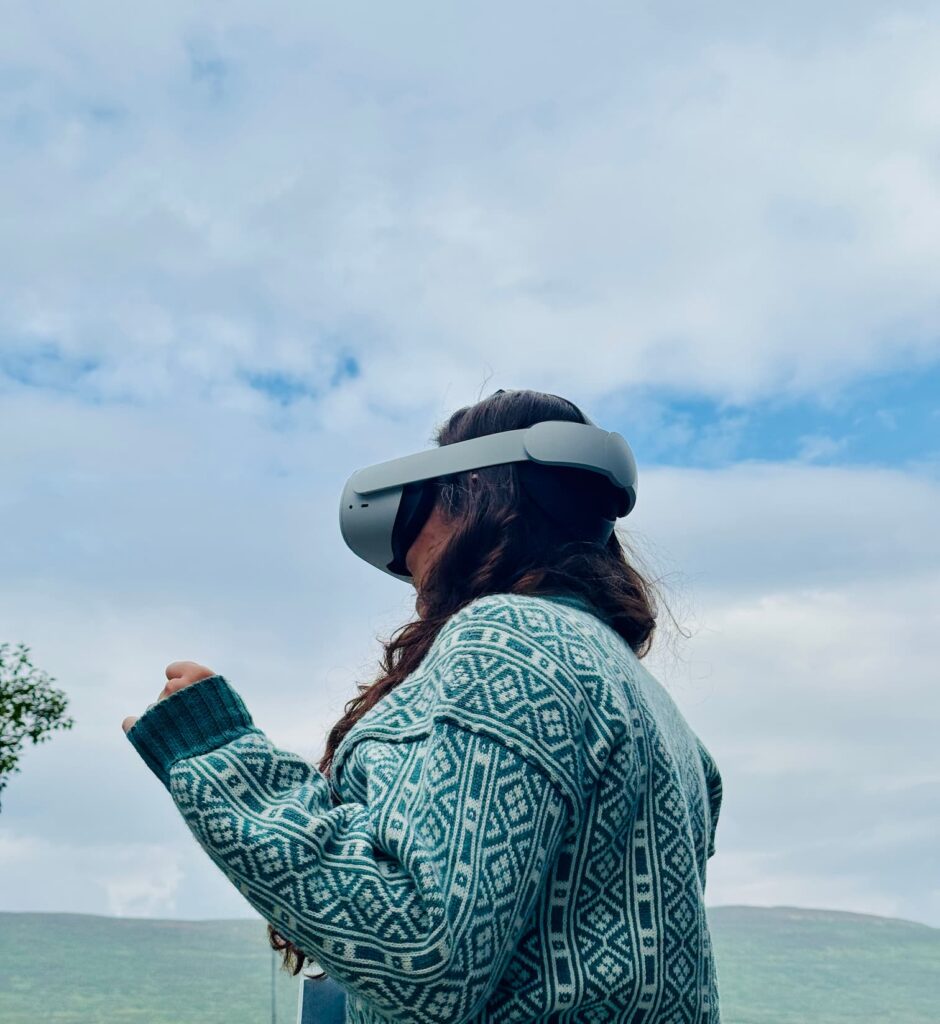
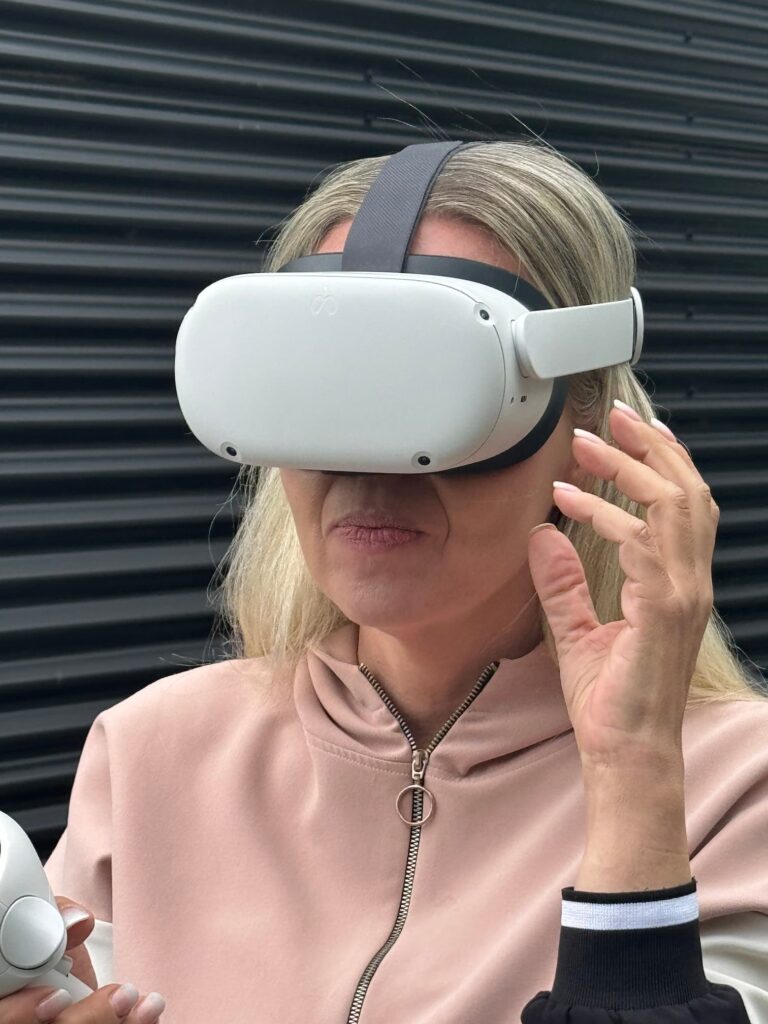
Documentation of project presentation at the IJMS conference, Akureyri, Iceland. July 2025
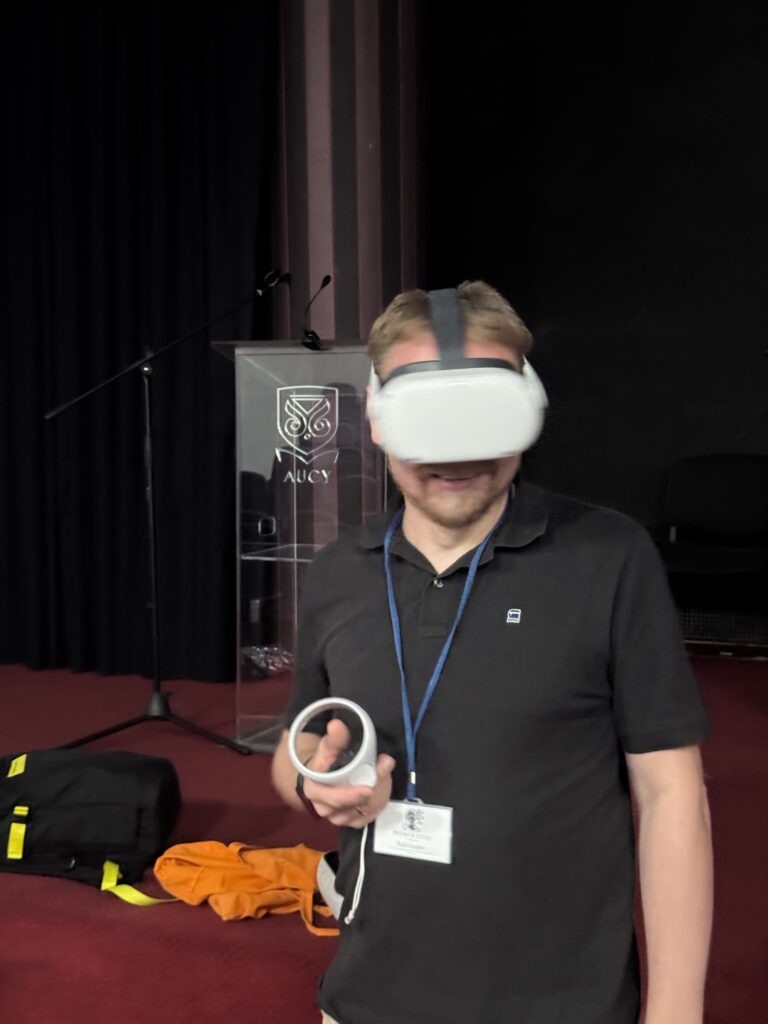
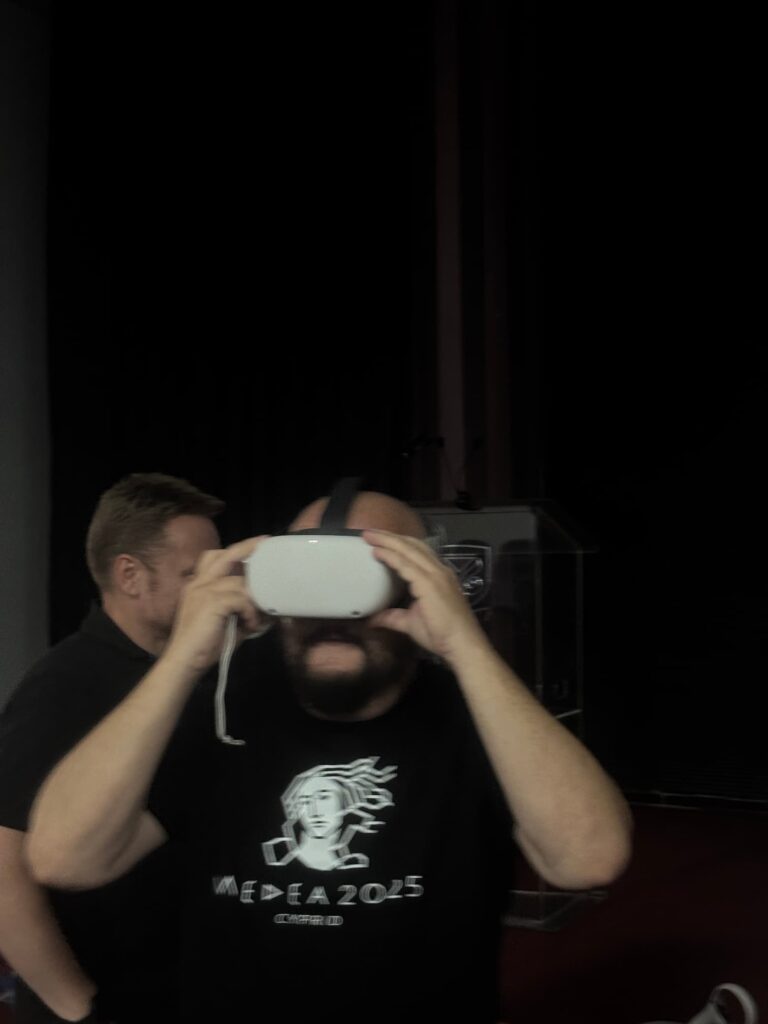
Documentation of project presentation at the MEDEA conference, Larnaca, Nicosia. Cyprus 2025